
Becoming a homeowner is one of the most rewarding milestones in life, but stepping across the threshold for the first time comes with a steep learning curve. Behind the excitement of turning the key lies a new reality: every system, surface, and square foot of property now requires routine oversight and proactive care. For first-time buyers, managing continuous maintenance needs alongside daily routines can quickly feel overwhelming. Without a structured strategy, minor property issues can easily go unnoticed until they escalate into costly repairs. To help navigate this transition smoothly, this ultimate first-year master checklist breaks down homeownership priorities month by month, providing a clear roadmap to protect property value, optimize daily living, and safeguard long-term financial investments.
Month 1: Unpacking, Security Setup, and Critical System Audits

Purchasing a home is one of the most significant financial and personal commitments an individual or family will ever undertake. While closing day brings immense excitement, the initial weeks following the transfer of ownership can quickly feel overwhelming. Managing logistically demanding moving tasks while learning the unique quirks of a new property requires structure and focus. Establishing a methodical plan during the first thirty days helps transition an unfamiliar property into a safe, functional, and organized household.
The immediate priority upon receiving the keys centers on physical security and entry control. Changing or rekeying every exterior lock is non-negotiable, as original owners, real estate agents, maintenance crews, and previous tenants may retain duplicate keys. Beyond traditional deadbolts on primary entryways, secondary structures demand attention. Homeowners should clear old access codes and program fresh pin numbers for the automatic garage door opener, ensuring that wireless keypads and handheld transmitters are strictly controlled by the new occupants.
Once access points are secured, turning attention toward utility infrastructure prevents minor accidents from escalating into costly disasters. Locating and tagging main shut-off valves for water, natural gas, and the primary electrical circuit panel should happen immediately. Every adult resident needs to know how to cut off water flow if a pipe bursts or how to trip main breakers during an electrical emergency. Testing smoke detectors, checking carbon monoxide alarms, replacing HVAC furnace filters, and installing fresh fire extinguishers on every level complete the basic life-safety review.
Organizing the transition efficiently also relies heavily on managing physical belongings. After unloading crates and furniture brought in by a professional moving company, unpacking should prioritize high-functionality rooms like the kitchen, primary bedroom, and main bathroom first. Staging boxes by room labels reduces clutter and creates immediate daily comfort, allowing homeowners to handle administrative responsibilities, such as updating utility accounts, setting up internet services, forwarding mail, and registering vehicles, without navigating unnecessary physical chaos.
Months 2 to 3: Overhead Structural Defense, Roof Health, and Drainage
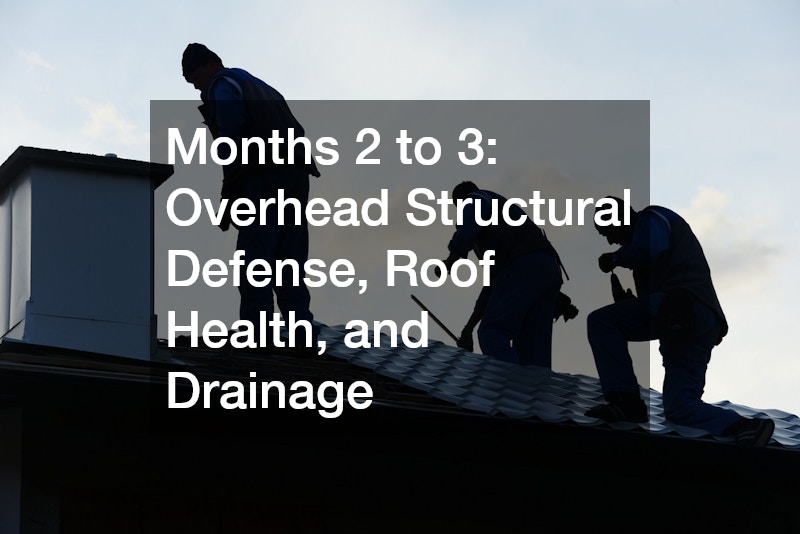
As the internal operations of the home stabilize during the second and third months, attention must shift outward toward the structural envelope. A home’s exterior serves as its primary shield against environmental elements, with water representing the single greatest threat to structural longevity. Systematic inspection and maintenance of overhead roofing materials and perimeter drainage channels safeguard the foundation and keep internal spaces dry.
Evaluating the roof starts with a ground-level visual inspection using binoculars to identify missing shingles, loose flashing around chimneys, or worn boot seals surrounding plumbing vent stacks. However, subtle damage, such as subtle moisture pooling or hairline shingle cracks, often remains invisible from the ground. Scheduling an evaluation with a certified roofing service ensures that qualified technicians inspect the roof surface and attic space thoroughly, identifying potential leaks and structural vulnerabilities before rainwater infiltrates ceiling drywall or insulation.
Effective water management overhead relies heavily on functional gutter networks to carry rain safely away from exterior walls. When gutters fill with leaves, twigs, and organic sediment, water overflows, cascading down exterior siding and pooling near the foundation footing. Over time, poor drainage leads to cracked basement walls, mold growth, and soil erosion. Beyond routine cleaning, exploring solutions from local gutter guard services can greatly streamline maintenance by blocking debris while allowing rainwater to flow freely through downspouts.
Additionally, homeowners should inspect the exterior perimeter grade surrounding the foundation walls and check exterior hose spigots. Ground level should slope gently downward away from the building, dropping at least six inches over the first ten feet. Filling low spots with compacted topsoil prevents standing water from saturating foundation footings during heavy rainfall. Disconnecting garden hoses before freezing temperatures arrive and installing insulated spigot covers further protects exterior plumbing lines from freezing and bursting.
Months 4 to 5: Internal Plumbing Systems, Water Lines, and Pest Control
Moving into the fourth and fifth months of homeownership provides an ideal window to examine internal utility infrastructure and establish perimeter defense barriers. Mechanical systems that operate continuously behind walls require routine inspection to prevent unexpected leaks, high utility costs, or sudden equipment failure.
Plumbing networks, in particular, demand close inspection. Homeowners should inspect exposed pipes beneath bathroom vanities, kitchen sinks, and utility tubs for signs of moisture, corrosion, or slow drips. Flushing the main water heater to remove sediment accumulation and testing its temperature-pressure relief valve extends the operational lifespan of the heating unit. Homeowners with basements should also test their sump pump by pouring a bucket of water into the pit to verify that the float switch activates properly. Checking water softener salt levels and inspecting water pressure regulators also helps prevent unexpected line strain. For complex issues such as persistent low water pressure, slow-draining main sewer lines, or suspicious water bill spikes, hiring a licensed plumber provides comprehensive diagnostics and professional repairs before minor leaks cause catastrophic water damage.
Alongside internal plumbing care, protecting the residence against silent pest invasions is essential for maintaining a healthy living environment. Small entry points around utility conduits, foundation vents, and window frames grant insects and rodents easy passage into conditioned living spaces. Filling exterior gaps with expandable foam, silicone caulk, or copper mesh creates effective physical barriers against pests seeking shelter or food sources.
However, perimeter sealing alone may not halt aggressive pests like termites or carpenter ants that target structural timber from beneath the soil. Engaging a dedicated pest control company allows experts to conduct thorough annual inspections, identify subtle signs of pest activity, and apply targeted perimeter treatments that protect the structural integrity of the house year-round.
Months 6 to 7: Outdoor Vegetation Management, Lawn Restoration, and Soil Care
Reaching the half-year mark often aligns with seasonal transitions, making months six and seven an appropriate time to direct focus toward landscaping and outdoor property lines. Proper tree care and ground maintenance enhance curb appeal while removing hazards that could endanger property, overhead power lines, or foot traffic.
Trees add immense aesthetic and environmental value to a residential lot, but unmanaged timber poses significant safety risks. Overhanging branches can damage roof shingles, clog gutter channels, or snap under ice accumulation and high winds. Conducting a visual survey of mature trees enables homeowners to spot dying limbs, structural rot, or dangerous leans. When trees show severe decay or sit dangerously close to structures, contacting a professional tree removal service ensures that dangerous limbs and hazardous trunks are safely dismantled using heavy equipment and proper rigging techniques.
Once surrounding trees are trimmed and stabilized, focus can pivot toward lawn health and ground cover restoration. Dense grass serves a practical purpose beyond visual appeal; established root structures hold soil firm, preventing surface erosion and assisting in groundwater filtration around the yard. Homeowners should also inspect underground irrigation systems, checking sprinkler heads for leaks, clearing clogged nozzles, and adjusting spray patterns to ensure water hits lawns rather than paved walkways or house siding.
For properties with patchy, damaged, or freshly graded topsoil, traditional broadcast seeding often yields inconsistent coverage and slow growth. Utilizing a specialized hydroseeding service provides an effective alternative, applying a slurry mix of seed, mulch, fertilizer, and soil conditioners across targeted areas. This slurry seals in moisture and accelerates root establishment, producing a uniform, healthy lawn that effectively combats erosion and weed growth across large outdoor spaces.
Months 8 to 9: Exterior Hardscaping, Concrete Maintenance, and Driveway Care

During months eight and nine, homeowners should examine paved surfaces, concrete walkways, and hardscape structures across the property. Paved surfaces endure constant exposure to heavy vehicle loads, sunlight, and freeze-thaw cycles, making early maintenance crucial to avoid full structural failure.
Driveways and front walkways represent high-traffic entryways that require regular structural checks. Small hairline cracks in concrete or asphalt allow surface water to seep beneath the top layer. In colder climates, water trapped within these cracks expands during freeze cycles, breaking apart the pavement foundation and creating widespread potholes or uneven settling. Applying high-quality flexible joint sealants into minor surface cracks halts moisture penetration, while applying protective concrete sealant keeps oil stains and winter salts from degrading the upper finish.
When asphalt or concrete surfaces exhibit severe degradation, deep pot holes, or improper drainage slopes that direct water toward the garage foundation, surface patching becomes insufficient. Contracting an experienced driveway paving firm enables homeowners to properly resurface or reconstruct worn driveways. Professional paving ensures ideal water drainage angles, smooth transitions, and durable surface compaction capable of supporting heavy vehicles for decades.
In conjunction with driveway care, inspecting retaining walls, stone steps, and paver patios prevents structural shifting. Checking that weep holes in retaining walls remain free of mud and root blockage prevents water pressure from building up behind stone structures. Sweeping fresh polymeric sand into paver joints locks patio stones together, while inspecting outdoor lighting fixtures along walkways ensures safe evening navigation and deters potential intruders.
Months 10 to 11: Expanding Usable Space, Patio Upgrades, and Energy Conservation

As the tenth and eleventh months arrive, residents have experienced their home through almost every season. This familiarity highlights how space is used and reveals opportunities to expand living areas, optimize seasonal comfort, and refine internal energy efficiency.
Outdoor living areas often remain underutilized during severe heat, heavy rain, or cold weather. Converting an open outdoor deck or back porch into an enclosed patio adds functional, weather-protected square footage to the residence. This addition offers a comfortable space to entertain guests or relax outdoors without exposure to harsh elements, intense sun exposure, or biting insects, effectively bridging the gap between indoor luxury and outdoor relaxation.
Along with expanding functional floor space, fine-tuning energy efficiency reduces recurring monthly operational costs. Inspecting rubber seals and weather stripping around exterior doors and double-hung windows prevents drafts and reduces heat loss during cold seasons. Reversing ceiling fan rotation direction based on the season—clockwise in winter to push warm air down, counterclockwise in summer to create a cooling breeze—improves temperature distribution throughout the living quarters. Cleaning refrigerator coils, bleeding radiator lines, and installing a smart thermostat allow precise scheduling of heating and cooling cycles, optimizing indoor climate control based on daily routines.
Attic insulation depth should also be verified before extreme seasonal weather hits. Proper insulation levels, paired with unblocked soffit vents, regulate roof temperatures, keeping indoor spaces warm during winter and cool during summer. This balanced insulation layer minimizes strain on HVAC systems and prevents destructive ice dams from developing along exterior gutters.
Month 12: Comprehensive Annual Audits, Financial Reserve Planning, and Strategy
Reaching the final month of the first year is a major milestone for any new homeowner. The twelfth month serves as an ideal opportunity to review completed projects, assess current operational budgets, and build a proactive maintenance plan for the second year of homeownership.
Reviewing full-year utility records helps homeowners evaluate operational expenses across all four seasons. Comparing water, gas, and electricity bills highlights seasonal consumption peaks and reveals opportunities for future energy-saving improvements. Homeowners should also review escrow statements sent by mortgage lenders to understand property tax and homeowners insurance adjustments. Updating property insurance policies with recent additions, major tool purchases, and exterior upgrades ensures that coverage limits accurately reflect the current value of the home and its contents. Organizing appliance warranties and service receipts in a centralized binder streamlines future warranty claims.
Establishing a dedicated financial reserve for home maintenance is essential for long-term ownership success. Real estate experts recommend saving one to two percent of the home’s total purchase price annually in a dedicated high-yield savings account. This reserve funds routine upkeep, covers unexpected equipment repairs, and prepares owners for eventual major capital expenses, such as furnace replacements or system overhauls.
Finally, organizing upcoming tasks onto an annual digital maintenance calendar ensures continuous protection of the asset. Setting recurring reminders for biannual air filter replacements, seasonal gutter cleanings, spring air conditioning inspections, chimney sweeps, and fall furnace tune-ups transforms overwhelming property management into structured, stress-free routine care.