
A property earns its keep when every square foot pulls in the same direction. Rooms should stay comfortable, healthy, and easy to live in, with water, heat, and air arriving exactly where they are needed. Outdoors, lawns and planting beds should stay green without waste, walkways and walls should stand firm, and mature canopies should provide shade without threatening the structure. When the interior and the grounds are planned and cared for as one, the home becomes easier to maintain, cheaper to operate, and far more enjoyable to live in.
The opposite is just as true. A small leak in a crawlspace invites insects and mold, a misaligned head soaks the siding while leaving the lawn brown, and an aging heat source runs constantly without keeping rooms warm. Cracked flashing lets water into the attic, failing drain lines turn a corner of the yard soggy, and retaining walls lean under the weight of saturated soil. Each issue drains money and comfort in its own way. Making every room and every patch of grass work in the owner’s favor means recognizing these connections and investing where the payoff is greatest.
Drying Damp Crawlspaces and Monitoring Sticky Trap Counts
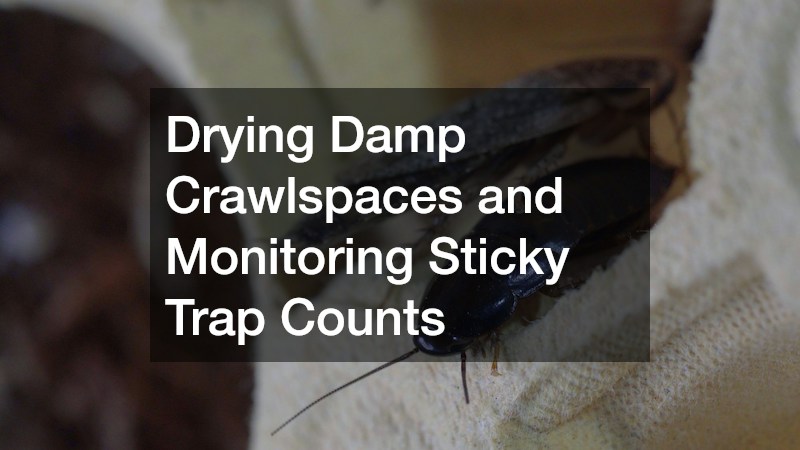
Moisture is the hidden driver behind many indoor insect problems. Damp crawlspaces, leaky plumbing, and condensation behind appliances create humid refuges where roaches thrive and breed. American and Oriental species often move up from crawlspaces, sewers, and mulch beds, while German cockroaches multiply rapidly in warm cooking and bathing areas. Without addressing moisture and monitoring activity, infestations rebound quickly after treatment, contaminating food and surfaces and triggering allergies and asthma.
Long-term cockroach control begins with an inspection of crawlspaces, basements, and plumbing areas to identify moisture sources, entry points, and harborage. Leaks are repaired, and crawlspaces are dried with vapor barriers, sealed vents, and dehumidifiers that keep relative humidity below 60 percent. Technicians apply gel baits and insect growth regulators in cracks and voids, and dust in wall voids. Sticky monitoring traps are placed under sinks, behind appliances, and in crawlspaces, and trap counts are recorded at each visit to track progress and guide adjustments.
Raising Low-Hanging Canopies and Cabling Weak Unions
Mature shade specimens add value and comfort, but their structure changes as they grow. Low-hanging limbs block walkways, driveways, and views, scrape vehicles, and shade out lawns. Co-dominant stems with tight V-shaped unions often contain included bark, which weakens the attachment and makes splitting more likely under the weight of ice, snow, or wind. When a large stem fails, it can damage shingles, fences, and anything else in its path.
A knowledgeable local tree service begins with an inspection by an ISA Certified Arborist to evaluate structure, health, and risk. Crown raising follows ANSI A300 standards, removing lower limbs with proper cuts outside the branch collar to provide clearance over walkways, driveways, and the house while keeping at least two-thirds of the height in live crown. Weak unions are supported with dynamic or steel cabling systems installed per ANSI A300 Part 3, typically two-thirds of the distance from the union to the branch tips. Cabling hardware is inspected every few years and adjusted as the canopy grows.
Planning Efficient Work Triangles and Selecting Durable Surfaces
The cooking space works best when its layout supports how the household actually prepares food and gathers. Poorly placed appliances force cooks to take extra steps, cross traffic paths, and carry hot pots long distances. Insufficient landing space beside the range, refrigerator, and sink leads to clutter and accidents, while surfaces that stain, scratch, or harbor bacteria wear out quickly and make cleaning difficult.
Thoughtful kitchen design begins with a work triangle connecting the sink, range, and refrigerator, with each leg between four and nine feet and a total perimeter of no more than 26 feet. Aisles of 42 to 48 inches allow one or two cooks to work comfortably, and landing areas of at least 15 inches flank major appliances. Surfaces are chosen for durability: quartz or granite countertops, porcelain tile or luxury vinyl plank floors, and semi-gloss or satin wall finishes that stand up to frequent cleaning.
Resealing Cracked Flashing and Replacing Missing Shingles

Flashing directs water away from the most vulnerable parts of the shell, such as chimneys, skylights, walls, and valleys. Over time, sealant dries and cracks, metal corrodes, and fasteners loosen, letting water seep behind the flashing and into the decking and framing. High winds tear off shingles, exposing underlayment to sunlight and rain. Left unrepaired, these small failures lead to stained ceilings, wet insulation, mold growth, and rotted sheathing.
Responsive local roof services begin with a careful inspection of shingles, flashing, and penetrations, followed by an attic check for leaks and damp insulation. Cracked sealant is removed and replaced with high-grade polyurethane or butyl sealant, and corroded flashing is replaced with new step, counter, or apron flashing integrated with the surrounding shingles. Missing shingles are replaced with matching material, with adjacent tabs carefully lifted and resealed. Exposed nails are sealed, and pipe boots are inspected and replaced when cracked.
Building Segmental Retaining Walls and Setting Natural Stone Steps
Sloped yards create opportunities for terraces, patios, and garden beds, but they also present challenges. Without proper retaining structures, soil erodes, sliding onto walkways and against foundations. Walls built without adequate base preparation, drainage, or reinforcement bulge, crack, and eventually collapse under the pressure of saturated soil. Uneven or poorly built steps create tripping hazards and make sloped areas difficult to use.
Experienced hardscaping companies begin by evaluating soil, drainage, and loads, then excavating a trench for a compacted crushed-stone base at least six inches deep. Segmental retaining wall blocks are set level, with the first course buried below grade, and each course is offset to create a setback batter. Perforated drain pipe and clean gravel behind the wall relieve hydrostatic pressure, and geogrid reinforcement is installed for taller walls per engineering specifications. Natural stone steps are set on compacted bases with consistent risers of six to seven inches and treads deep enough for a comfortable, secure stride.
Adjusting Misaligned Heads and Fixing Leaking Zone Valves
Irrigation is only effective when water lands where it is needed. Heads knocked out of alignment by mowers or foot traffic spray sidewalks, driveways, and siding while leaving lawn areas dry. Sunken or tilted heads create uneven coverage, and clogged nozzles reduce flow. Leaking valves waste water continuously, creating soggy spots and high water bills, while mismatched heads in a single zone apply water at different rates, leading to brown patches and overwatered areas.
A well-tuned sprinkler system starts with a zone-by-zone inspection, running each zone to check head alignment, spray patterns, and coverage. Tilted or sunken heads are raised and leveled, spray arcs and radii are adjusted, and clogged nozzles are cleaned or replaced with matched-precipitation-rate nozzles. Leaking valves are repaired by replacing diaphragms and solenoids or the entire valve. A catch-cup audit measures precipitation rates and distribution uniformity, and smart controllers adjust run times based on weather data and soil moisture.
Thawing Frozen Pipes and Upgrading Low-Flow Fixtures

Cold snaps put supply lines in exterior walls, crawlspaces, and unheated garages at risk. When water freezes, it expands, building pressure that can split copper, PEX, and fittings, often far from the frozen section. When the ice thaws, water floods walls, ceilings, and floors. Older fixtures, meanwhile, waste large volumes of water, with toilets using up to 3.5 gallons per flush and showerheads flowing at 5 gallons per minute or more.
Prompt plumbing service begins with shutting off water to the affected area and safely thawing frozen sections with heat lamps, heat tape, or warm air, never open flame. Split pipes are replaced with PEX-A or copper, and vulnerable runs are insulated, rerouted inside the thermal envelope, or protected with heat cable. Frost-free sillcocks replace standard hose bibs. Older fixtures are upgraded to WaterSense-labeled toilets using 1.28 gallons per flush or less, showerheads at 2.0 gallons per minute, and aerated faucets at 1.5 gallons per minute.
Installing High-Efficiency Boilers and Balancing Radiant Loops
Hydronic systems provide quiet, even warmth, but older boilers waste a significant portion of their fuel. Cast iron units with standing pilots and atmospheric venting often operate at 60 to 80 percent efficiency, sending heat up the chimney. In radiant floor and baseboard systems, unbalanced loops lead to some rooms overheating while others stay cool, and air trapped in the piping causes noise and poor circulation.
A trusted Heating company begins with a room-by-room heat loss calculation to size new equipment correctly, then installs a modulating condensing boiler with efficiency of 95 percent or higher. These units adjust output to match demand and use outdoor reset controls to lower water temperature in milder weather. Sealed combustion venting with PVC or polypropylene pipe and a condensate neutralizer are installed to code. Radiant loops are flushed, purged of air, and balanced using flow meters on the manifold, ensuring even, comfortable warmth throughout the house.
Excavating Failed Leach Lines and Replacing Cracked Distribution Boxes
The leach field is where effluent from the tank is treated by soil, and when it fails, wastewater has nowhere to go. Solids that escape the tank clog perforated pipes and the gravel and soil around them, forming a biomat that blocks absorption. Distribution boxes crack or settle over time, sending effluent unevenly to certain lines and overloading them. Warning signs include soggy ground, lush green strips, sewage odors, and slow drains or backups.
Thorough local septic repair begins with locating the system and inspecting the tank, distribution box, and leach lines with cameras and probes. Failed leach lines are excavated, and clogged pipe and gravel are removed and replaced with new perforated pipe, washed stone, and filter fabric, or with chamber systems that provide more storage and infiltration area. Cracked or settled distribution boxes are replaced with new concrete or polyethylene boxes set level on a compacted base, with flow equalizers to divide effluent evenly. Effluent filters added to the tank outlet then keep solids from reaching the rebuilt field, and risers make future inspections quick and simple.
Calibrating Airflow Readings and Flushing Clogged Condensate Drains

Heating and cooling equipment depends on proper airflow to deliver comfort efficiently. Dirty filters, blocked returns, and undersized ducts raise static pressure, reducing airflow, increasing energy use, and stressing blower motors. During cooling season, condensate drains collect algae and sludge, and a blocked line can overflow the drain pan, flooding ceilings and floors or tripping a safety switch that shuts down cooling on the hottest days.
Comprehensive HVAC Service begins with replacing filters and measuring total external static pressure with a manometer, comparing readings against the manufacturer’s rated limits. Technicians use an anemometer or flow hood to verify airflow at supply registers and adjust blower speeds to deliver about 350 to 400 CFM per ton of cooling. Condensate drains are flushed with water or a mild vinegar solution, and algae tablets are placed in the pan. Float switches are tested, and traps and vent openings are cleared. Electrical connections, capacitors, and contactors are checked as well, so small faults are corrected before they cause a breakdown.
A home that works in the owner’s favor depends on interior systems and outdoor features supporting one another. Dry crawlspaces, efficient plumbing fixtures, and well-planned cooking spaces make daily life healthier and easier, while properly tuned heating and cooling equipment keeps every room comfortable. A tight shell and functional drainage protect the structure, and a properly operating onsite system handles wastewater safely.
Outdoors, healthy canopies, sturdy retaining walls and steps, and precise irrigation keep the grounds attractive and usable without waste. Regular inspections and seasonal maintenance, from insect monitoring and pipe protection to equipment tune-ups and irrigation audits, catch problems early and extend the life of every system. Planning upgrades thoughtfully helps owners invest in improvements that deliver lasting value. Scheduling outdoor work in spring and fall, and interior work during milder months, keeps disruption low and gives each project the attention it deserves.
The reward is a property where every room and every patch of grass contributes to comfort, efficiency, and enjoyment. With careful planning, skilled workmanship, and consistent care, homeowners can create a home that saves money, stays healthy, and remains a source of pride for years to come.